

Jamun Finds Its Place in Indian Spirits
Ingredient-led trends in Indian spirits have often arrived with momentum and settled at lower volumes than initial excitement suggested. Jamun has structural advantages that some earlier experiments lacked: it is known across the country rather than regionally, it has genuine consumer memory behind it, and its flavour profile is complex enough to survive multiple product interpretations.

Contributor

Hapusa Gin's Forager Journey, a multi-day expedition where winning bartenders from around the world forage unique botanicals.
Most Indians have a specific memory of jamun: fingers-stained purple for hours, the fruit eaten with salt from a newspaper cone, gone from the market before the season felt like it had properly started. Tart, slightly astringent, with a colour so concentrated it behaves almost like a dye; it is a fruit that has spent most of its life in the category of things eaten quickly and seasonally, with very little commercial infrastructure built around it. The bar industry moves slowly with ingredients like this. Seasonality and inconsistency make them difficult to work with at scale, and jamun (available for a matter of weeks across Uttar Pradesh, Maharashtra, Karnataka, and Bihar), offered little to a bartender looking to build a consistent programme.
A change in pace
Syrups, reductions, and concentrates changed that. Preserved formats gave the fruit year-round stability, and Indian bartenders began working with it seriously. By 2025, jamun juleps had joined kokum sours and turmeric fizzes among the more noted directions in Indian cocktail programming. Its tartness balances sugar and alcohol cleanly. Its astringency prevents cocktails from turning cloying; a persistent problem with fruit-forward serves. And its colour gives a drink immediate visual identity without requiring much else. Hapusa’s Forager’s Championship, which tasks bartenders with building cocktails from ingredients specific to their own regions, drew 100 participants working with everything from fermented kokum on the Konkan coast to jolphai, a wild regional olive, in Guwahati. Jamun featured across entries in multiple editions. Vikram Achanta, who has documented Indian bartending through Tulleeho since 2001, has described this turn toward indigenous ingredients as a preference for flavour with provenance: a shift away from the global templates that dominated Indian bar menus for most of the previous decade.
The spirits industry tends to follow bartender culture rather than lead it, and the jamun launches of the past two years fit that pattern. Mohan Meakin’s Jamun Dry Gin, distilled at the Kasauli Distillery using Himalayan spring water and native juniper berries, launched in 2022 and has since won a Gold Medal at Gin of the Year 2024 and recognition at The Gin Guide Awards 2025, expanding into eleven states and adding a 180ml SKU this year. It was one of the earlier commercial bets on the ingredient, positioned at the premium end, built around botanical complexity rather than sweetness.
The mass-market moves came later and in quick succession. In July 2025, Diageo India launched Smirnoff Minty Jamun, a triple-distilled flavoured vodka created specifically for Indian consumers, rolling out across Haryana, Karnataka, and Maharashtra. Radico Khaitan followed with Jamun Spicy Mint under the Magic Moments Flavours of India range, blending the fruit with mint and spice, starting in Uttar Pradesh before expanding to Maharashtra, Assam, Goa, Karnataka, and Rajasthan. Two vodka launches from India's largest spirits companies arriving within months of each other suggests their consumer research had arrived at the same conclusion independently.
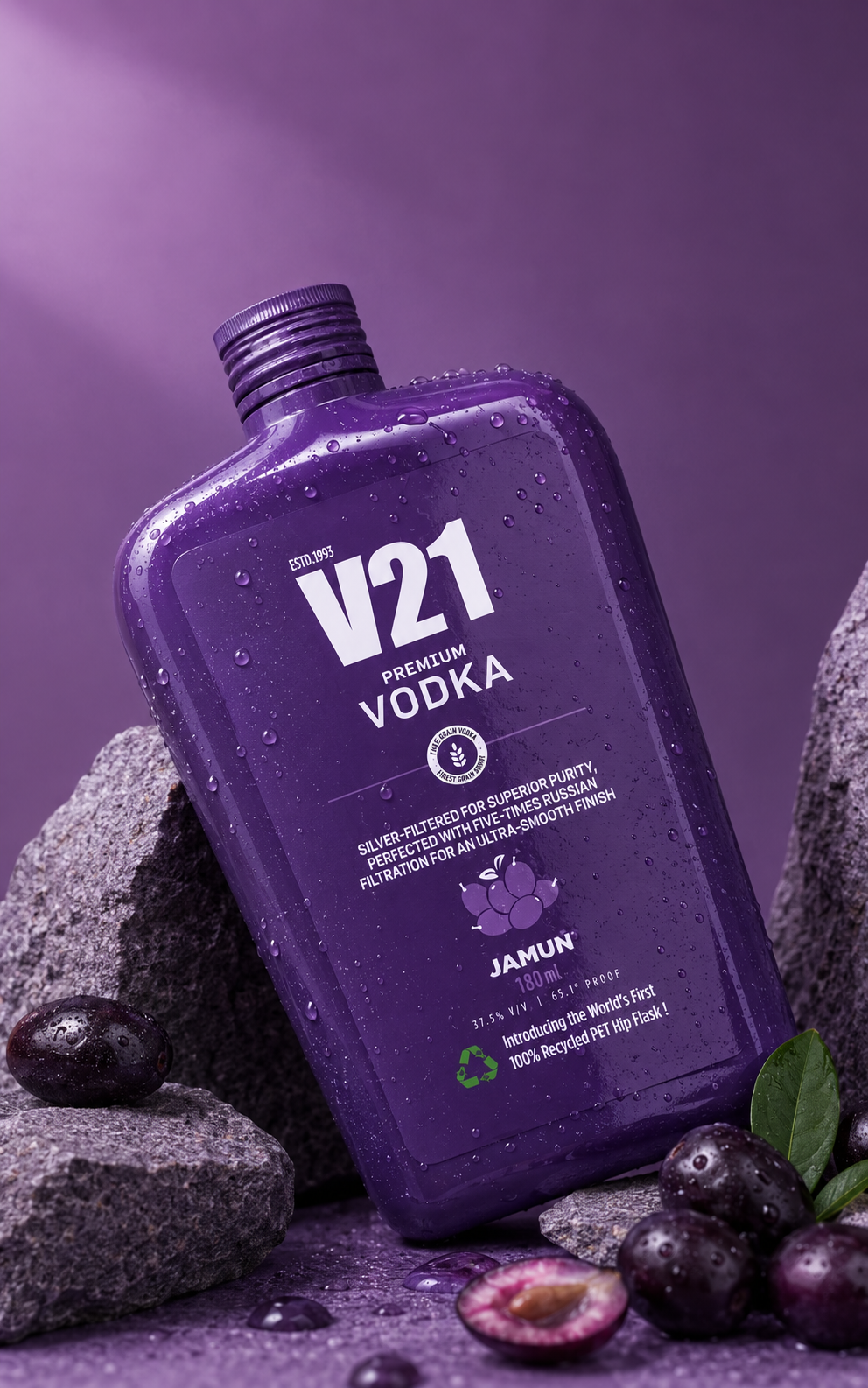
What's notable is how differently each brand has read the same ingredient. Mohan Meakin treated jamun as a botanical anchor in a gin built around Himalayan provenance. Diageo paired it with mint for cooling contrast. Radico added spice, leaning into the masala flavour associations many Indian consumers already carry with the fruit. That divergence matters: it indicates jamun can support different flavour profiles, rather than being an ingredient with only one interpretation. Whether this holds is the question the industry hasn't answered yet. Ingredient-led trends in Indian spirits have often arrived with momentum and settled at lower volumes than initial excitement suggested. Jamun has structural advantages that some earlier experiments lacked: it is known across the country rather than regionally, it has genuine consumer memory behind it, and its flavour profile is complex enough to survive multiple product interpretations. Whether that translates into sustained commercial performance is what the next few years will establish. What is already clear is that jamun has moved from seasonal street fruit to a structured ingredient category within Indian spirits faster than the industry would typically expect.
Contributor
Utsav KediaUtsav Kedia is the VP-Business Growth at Great Galleon Ventures Limited.
More from Food

These Chef-Owned Restaurants Are Having a Moment
For years, the restaurant world ran on a familiar formula– celebrity chefs in the kitchen, investors behind the scenes, and brands carefully built into polished dining empires. But today, some of the…
Limoncello Editors · 7 August 2026
The Big Plate Shift: Food Trends That Will Define 2026
Imagine this: you open your freezer and rather than yesterday’s leftovers, you’re greeted with a chef-level butter chicken or miso […]
Anushka Manik · 30 October 2025
Your Guide to Celebrating Halloween in Delhi
In a city that never misses a reason to celebrate, Halloween has quietly evolved from costume chaos to curated soirées. […]
Anushka Manik · 30 October 2025
The Limoncello Letter
Stories like this, delivered every other Thursday.